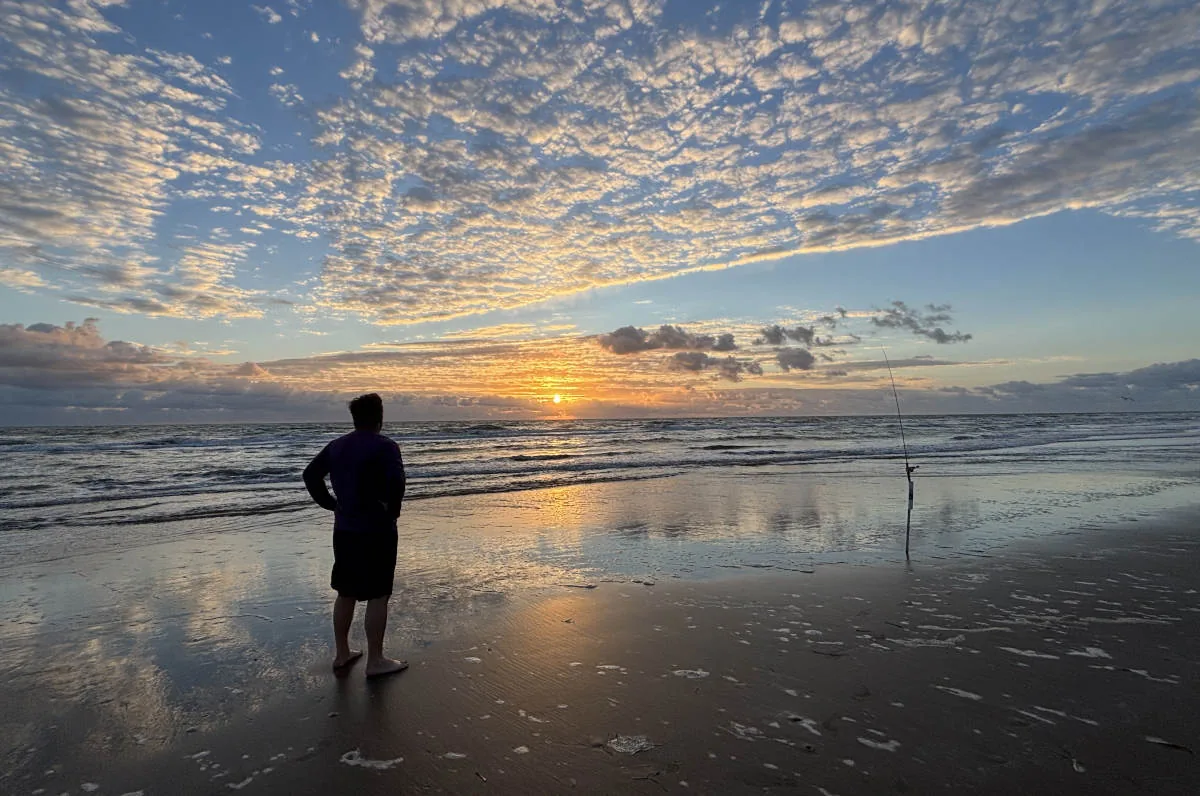
Starting in late September and continuing through about mid-November, fall brings one of the most exciting fishing seasons to the Gulf Coast of Texas and Louisiana. This is spawning season for redfish, and the big bull reds begin gathering around coastal passes, beaches, and nearshore waters, where anglers have a better opportunity to catch them.
These mature redfish can reach impressive sizes, often weighing 20 to 40 pounds or more. While smaller redfish can be caught throughout much of the year in the bays and marshes, fall is one of the best times to target the larger fish. For anglers looking to hook into a monster redfish from the beach, jetties, or a small boat, it's hard to beat this time of year.
We spend most of our fishing time in two different areas along the Gulf Coast: the bayous and marshes south of New Orleans, Louisiana, and the small fishing towns along the Laguna Madre in South Texas. In Louisiana, we typically fish from our bay boat, launching out of the Jean Lafitte area and exploring the seemingly endless marshes and waterways. Down in Texas, we spend more of our time fishing from the beaches and jetties.
These are two very different styles of fishing, but both offer excellent opportunities to catch redfish during the fall season.
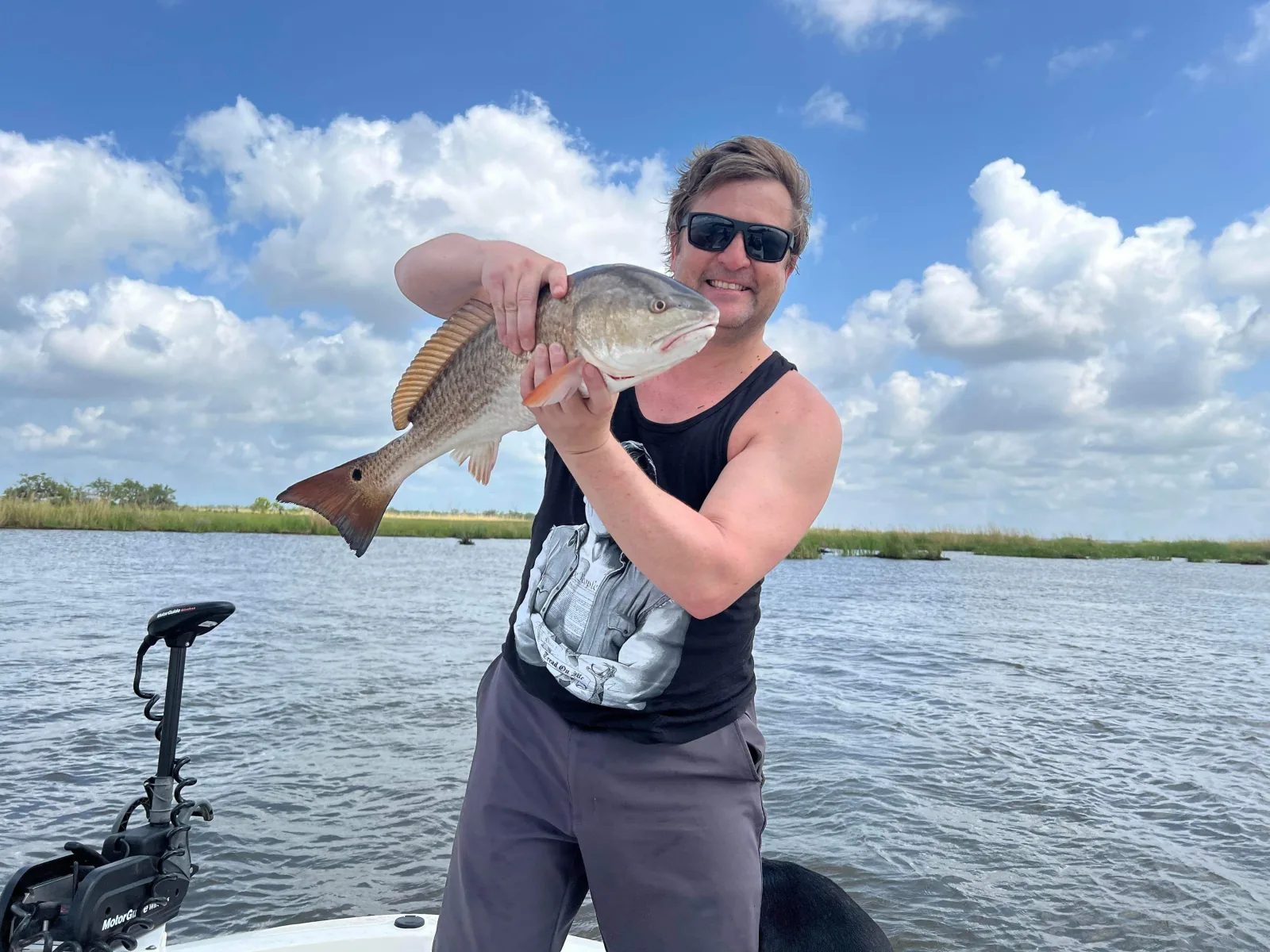
Fall Redfish Fishing in the Louisiana Marshes
We've been fishing the waters around New Orleans much longer than we've been exploring the Texas coast, so naturally, we know the Louisiana marshes quite a bit better. We also have the advantage of keeping a nice boat in the area, which gives us access to an enormous amount of water that would otherwise be difficult to reach.
Another big advantage is having a longtime client and good friend who worked as a professional fishing guide in South Louisiana for many years. He showed us the ropes of the region, including where to look for fish, how the tides influence their movements, and which areas tend to produce at different times of the year.
Most of our trips start around Jean Lafitte, where we launch the boat and head south toward The Pen, Little Lake, and the surrounding marshes. It's an incredible area to explore, with countless small bayous, ponds, cuts, and shorelines that can hold redfish, speckled trout, and black drum.
Unfortunately, our first planned weeklong fall fishing trip didn't go quite as expected. A hurricane moved through the region and stirred up the water, leaving us with poor fishing conditions. We managed to get out on the boat for only one day before having to change our plans.
That's part of fishing the Gulf Coast during the fall. The weather can be beautiful one week and completely turn things upside down the next. Cold fronts, tropical systems, changing tides, and wind-driven water levels can all affect the fishing.
We're hoping to make a few more runs into the South Louisiana marshes before the larger redfish become harder to find in the interior waters as winter approaches. Even when the big bulls aren't around, there's still plenty of good fishing to be had in these bayous.
Read More: Fall Redfish Fishing in Lafitte, Louisiana – Reds in The Pen
Bull Redfish Fishing on the Beaches and Jetties of South Texas
Our second set of fall fishing adventures takes us down to the beaches and jetties of South Texas. We've been spending more time exploring this part of the Gulf Coast in recent years, particularly around Port Aransas, Corpus Christi, and South Padre Island.
Unlike Louisiana, where we have a boat and spend a good portion of the day searching the marshes, our Texas trips are more focused on fishing from shore. The Gulf Coast has some excellent jetties that extend into the water or protect major shipping channels, giving land-based anglers access to deeper water and larger fish.
During the fall, these structures can be particularly productive for bull redfish as the mature fish gather around passes and nearshore areas. With some heavy tackle, a good chunk of cut bait, and a little patience, it's possible to hook into a redfish that will give you one heck of a fight.
The biggest advantage of jetty fishing is that you don't need a boat. You can drive to many of these locations, walk out onto the rocks, and cast into water that may be holding the same fish anglers are targeting from boats.
The downside is that many jetties are not particularly easy to navigate. Large, uneven rocks, slippery surfaces, and waves breaking over the structure can make getting to the better fishing spots a challenge. Some locations offer much easier access, particularly for anglers who don't want to haul a bunch of heavy equipment across the rocks.
South Padre Island is one of our favorite places to fish, especially during the fall bull redfish run. The jetties around Brazos Santiago Pass offer some outstanding opportunities, and there are miles of beaches where you can set up surf fishing gear and wait for a big red to find your bait.
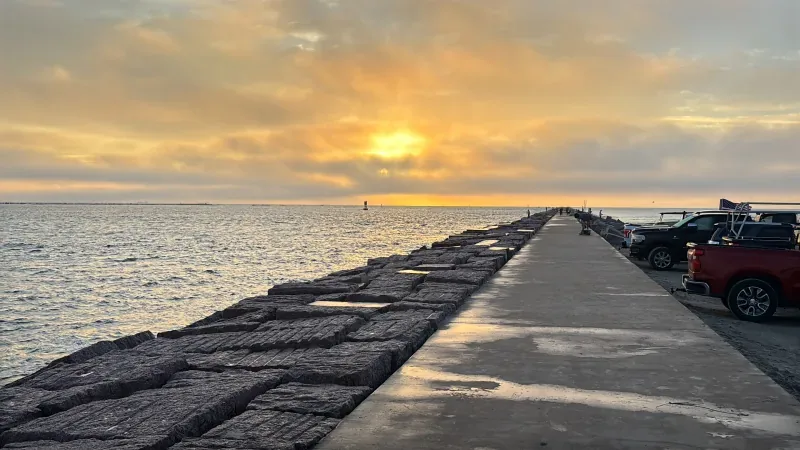
Read More: Best Fishing Jetties on the Texas Gulf Coast – From Galveston to South Padre Island
Two Different Ways to Chase the Same Fish
One of the things I enjoy most about fishing the Gulf Coast is how different the experience can be depending on where you go.
In Louisiana, a good day might involve running the boat through miles of marsh, quietly working the shorelines with a trolling motor, and casting soft plastics or live shrimp into shallow pockets where redfish are feeding.
In South Texas, we might spend the afternoon sitting on a beach with a couple of heavy rods planted in sand spikes, watching the waves and waiting for a bull redfish to pick up a chunk of cut bait.
The Louisiana trips tend to involve more exploring and actively hunting for fish, while beach and jetty fishing can be a little more relaxed, at least until something big grabs the bait.
Both approaches have their advantages, and there's something special about hooking into a big redfish, regardless of whether you're standing on a rocky jetty or casting from the front of a bay boat.
Fall Is One of the Best Times to Fish the Gulf Coast
If you're planning a fishing trip to Texas or Louisiana, late September through November is one of my favorite times of year to be on the water. The oppressive summer heat finally begins to ease, the beaches become a little less crowded, and larger redfish are often more accessible around coastal passes and nearshore waters.
Of course, there's never a guarantee that the fish will cooperate. We've had plenty of trips where the weather ruined our plans or we spent more time searching for fish than actually catching them.
But that's part of the adventure.
Whether we're exploring the marshes south of New Orleans or standing on a jetty along the Texas coast, there's always the possibility that the next cast will hook into a bull redfish that makes the entire trip worthwhile.
And that's more than enough reason for us to keep heading back to the Gulf Coast every fall.