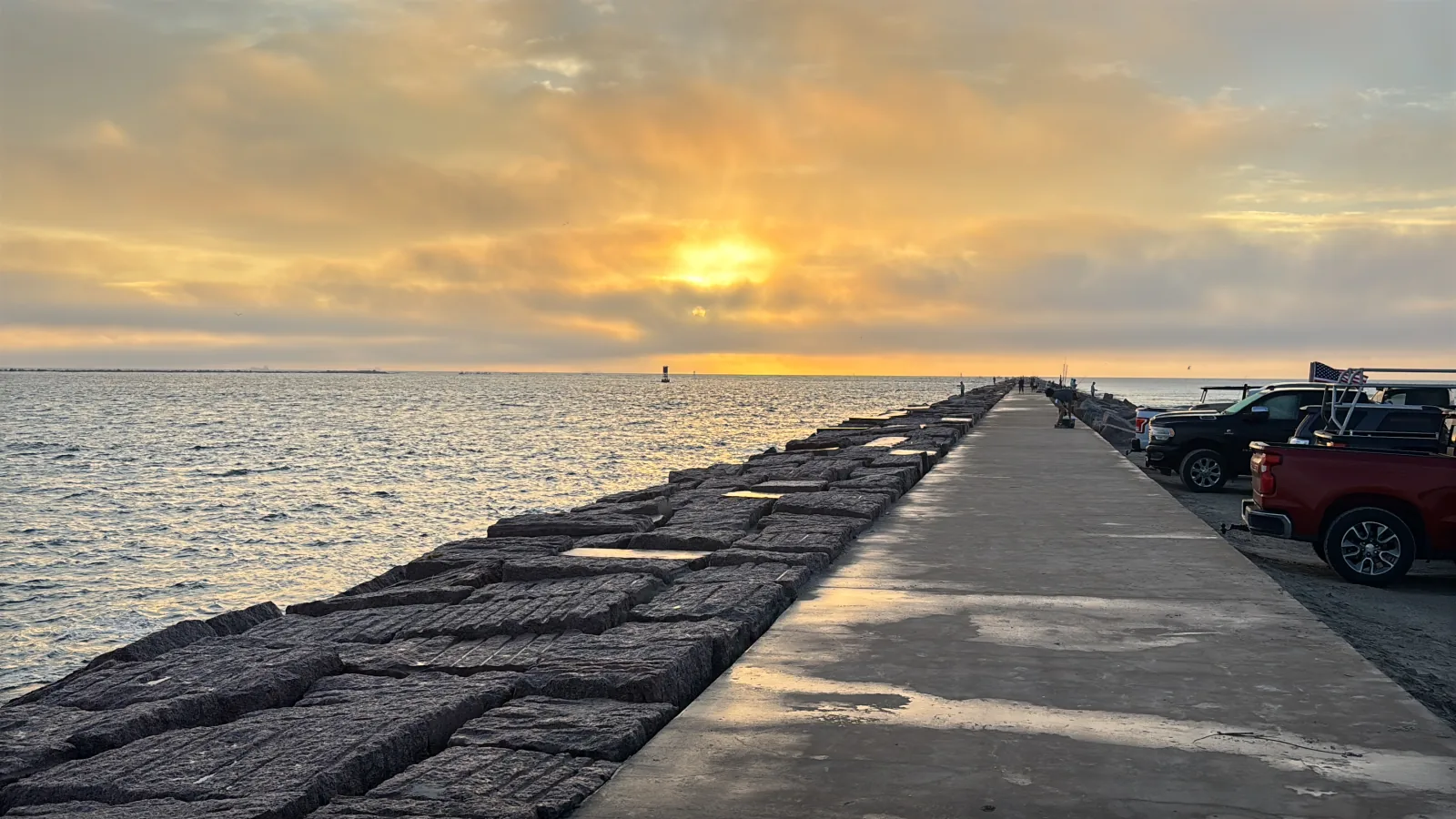
The Texas Gulf Coast has some outstanding jetty fishing opportunities, stretching from Galveston all the way down to South Padre Island near the Mexican border. Whether you're targeting bull redfish, speckled trout, sheepshead, blacktip sharks, or the occasional offshore game fish, these rock structures provide access to deeper water without needing a boat.
Over the years, we've fished quite a few of these locations, sometimes from the jetties themselves and other times from our boat or kayak. Some are easy to access, with paved roads and nearby bait shops, while others require a long walk across slippery rocks or even a boat ride to reach.
Here's our guide to some of the best fishing jetties along the Texas Gulf Coast, heading south from Houston toward the border, with a few personal observations about the fishing, accessibility, and surrounding areas.
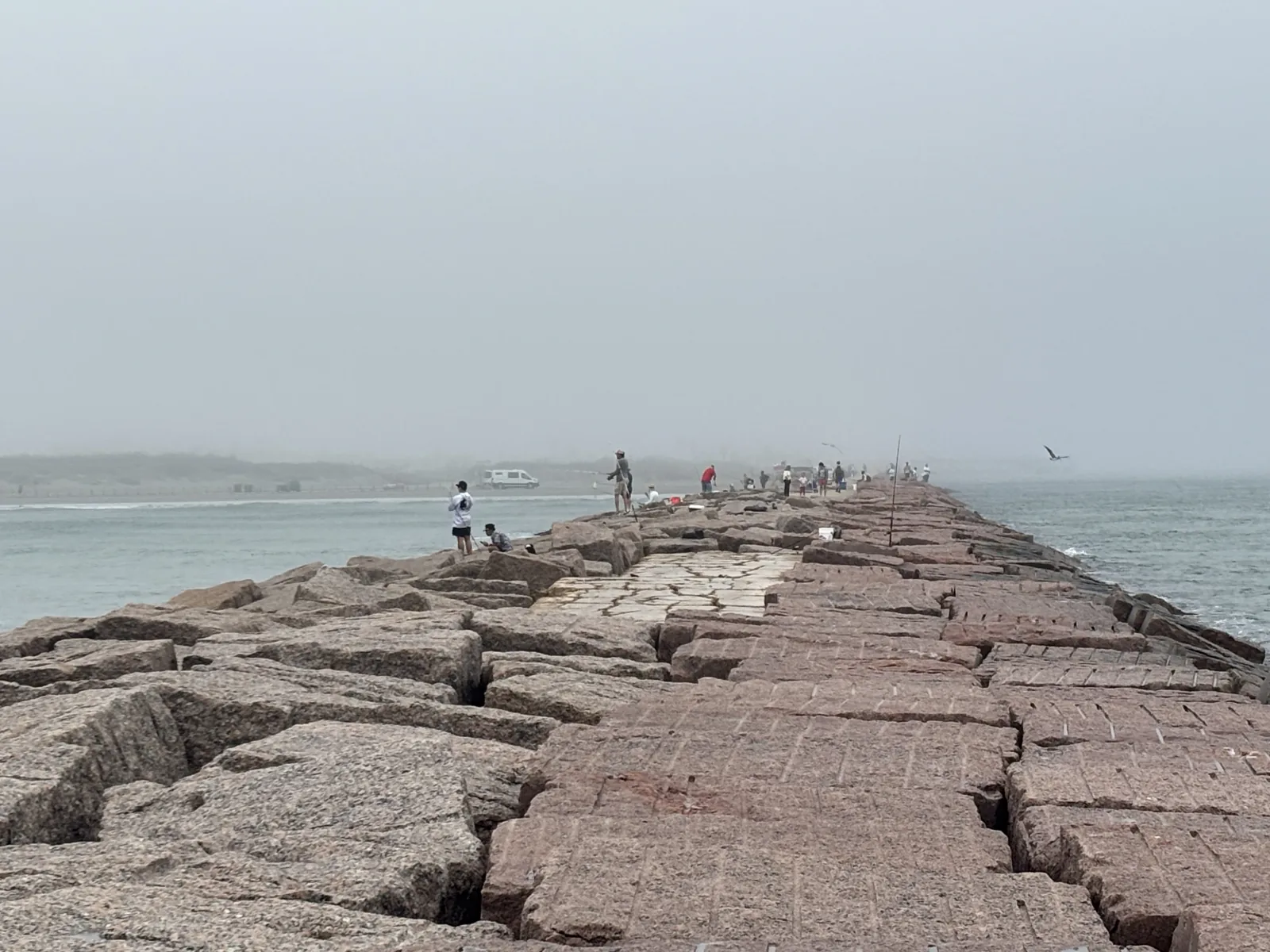
Texas City Dike – One of the Longest Fishing Structures in the World
The first major jetty-like structure as you head south from Houston is the Texas City Dike. At approximately 5.3 miles long, it's one of the most impressive man-made fishing structures anywhere in the world. Unlike most traditional fishing jetties, you can actually drive your vehicle along the entire length of the dike, making it one of the most accessible saltwater fishing destinations in Texas.
There are numerous places to fish from the rocks, launch a kayak, or wade into the surrounding flats. The dike also has boat ramps, fishing piers, and plenty of parking. It's an especially attractive option for anglers who don't want to carry a bunch of heavy fishing gear a half-mile across uneven rocks.
There are bait shops near the entrance, and affordable hotels can be found just a few miles away in Texas City. For someone planning a weekend fishing trip, the convenience is hard to beat.
Despite all these advantages, I've always been a little hesitant to fish here regularly. Texas City sits next to one of the largest concentrations of petroleum refineries and industrial facilities in the country. While that doesn't automatically mean the fish are unsafe to eat, I'm personally not excited about keeping a cooler full of fish from this area.
There are also official fish consumption advisories covering portions of Galveston Bay and surrounding waters. If you're planning to keep your catch, I recommend reviewing the Texas Parks and Wildlife fish consumption advisories before your trip.
For access information and current vehicle fees, visit the official Texas City Dike website.
Galveston Beach – Smaller Jetties and Fishing Piers
Continuing south, the next major fishing destination is Galveston Island. Unlike Texas City, Galveston has a collection of smaller rock groins extending from the beach into the surf, along with several fishing piers and other shoreline access points.
These rock structures can produce speckled trout, redfish, whiting, and other common Gulf Coast species, particularly when the surf is relatively calm and baitfish are moving through the area. There are also places near the entrance to Galveston Bay where anglers target flounder, especially during their seasonal migrations.
One advantage of Galveston is the sheer number of places to fish. You can spend a morning casting from a rock groin, move to a fishing pier, and then try your luck along the bay side without having to travel very far.
The downside is the crowds. Galveston is one of the most popular beach destinations in Texas, and fishing spots can get pretty busy during weekends and holidays. Swimmers, surfers, and beachgoers can also make surf fishing difficult in some areas.
We don't fish Galveston very often, partly because of the crowds and partly because of my concerns about the water quality in the surrounding bay system. I prefer heading farther down the coast when I have enough time.
If you're visiting from Houston, however, Galveston remains one of the easiest places to get in a day of saltwater fishing. You can also check out our Houston Travel Guide for other attractions and trip ideas.
Surfside Beach and Freeport – A Less Crowded Alternative
The next major jetty system is located around Surfside Beach and the entrance to Freeport Harbor. The Freeport jetties protect the ship channel and provide access to deeper water where Gulf currents, baitfish, and larger game fish come together.
We've fished this area from our boat, and I've also walked out on the large jetty to check out the shore fishing opportunities. There were plenty of anglers along the rocks, and the structure looked like it had some excellent spots for fishing the channel.
Surfside is somewhat in the middle of the more popular coastal destinations, between Galveston and the Corpus Christi area. That might actually be one of its biggest advantages. You can get away from some of the larger tourist crowds while still having access to beaches, bait shops, and nearby lodging.
Depending on the season and water conditions, anglers target redfish, speckled trout, sheepshead, black drum, and other species that move through the channel.
I haven't spent enough time fishing from the rocks here to call it one of my favorites, but it's definitely a location I'd like to explore more. If you're looking for a fishing weekend without the crowds of Galveston or South Padre Island, Surfside and Freeport are worth considering.
Port Aransas – Excellent Jetty Fishing Near Mustang Island
After Freeport, you'll have a longer drive down the coast before reaching another of my favorite fishing destinations: Port Aransas.
The Port Aransas jetties sit at the entrance to the Corpus Christi Ship Channel, where water moves between the Gulf of Mexico and the bays behind Mustang Island. This combination of current, structure, and deeper water makes the area a popular destination for redfish, trout, sheepshead, and various other saltwater species.
The South Jetty is the easiest to reach. It's located just a short drive from the town of Port Aransas, and you can access the area near the beach without much trouble. There are sections where you can park relatively close to the rocks, making it easier to get your fishing equipment out to a productive spot.
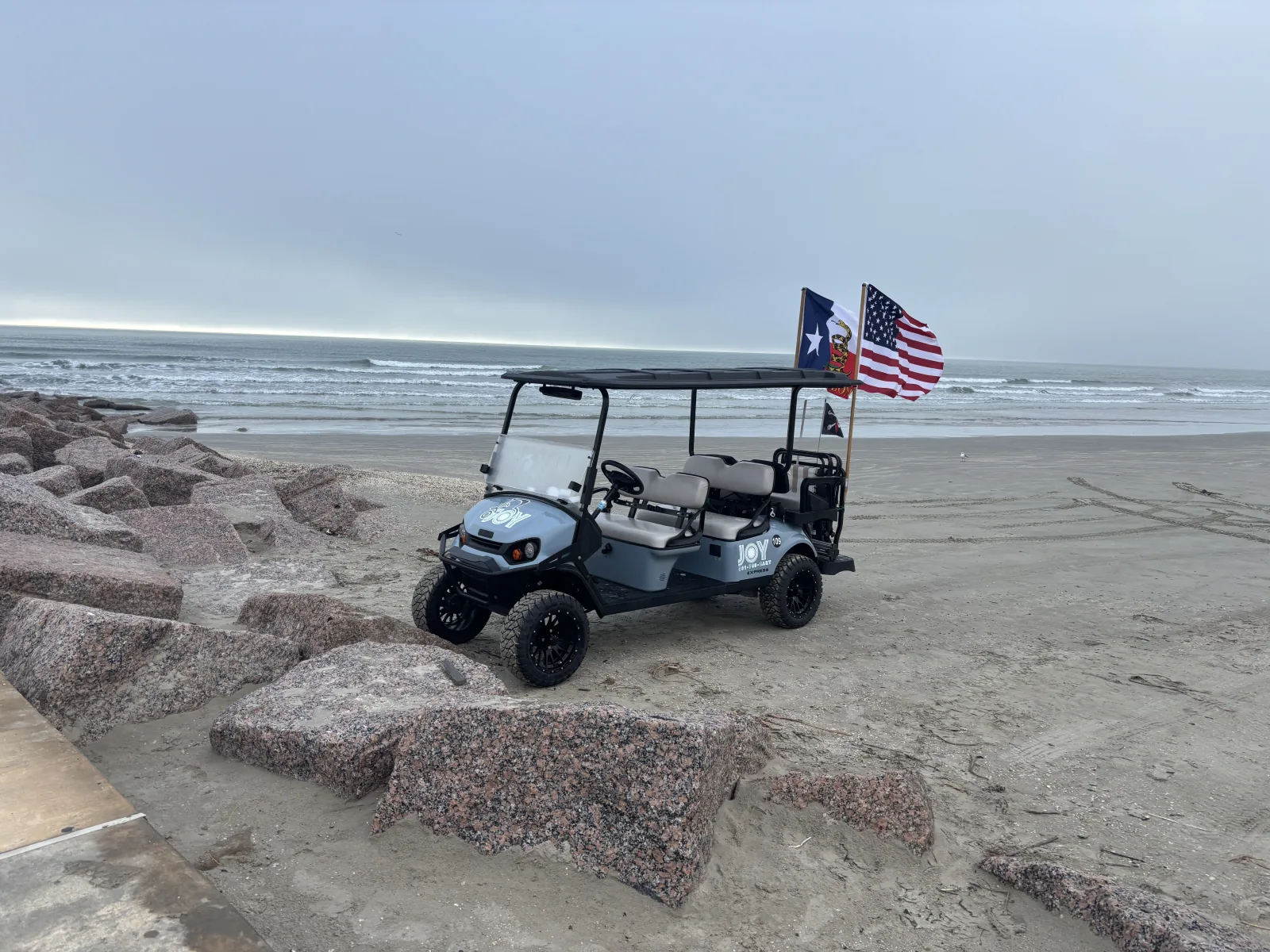
We fished the area this year and caught a few small snapper. There were plenty of other anglers pulling in fish, and the overall action looked pretty good. You don't necessarily have to hike all the way to the end of the jetty to find productive water.
The North Jetty is a different story. It's located across the channel on San José Island, which cannot be reached by car. You need to take the passenger Jetty Boat from Fisherman's Wharf in Port Aransas. The boat drops anglers near the base of the North Jetty, providing access to a much less developed stretch of coastline.
That extra effort can be appealing if you want to escape some of the crowds. Just remember that San José Island has very limited facilities, so bring plenty of water, bait, food, and anything else you'll need for the day.
You can find transportation details through the Port Aransas Jetty Boat.
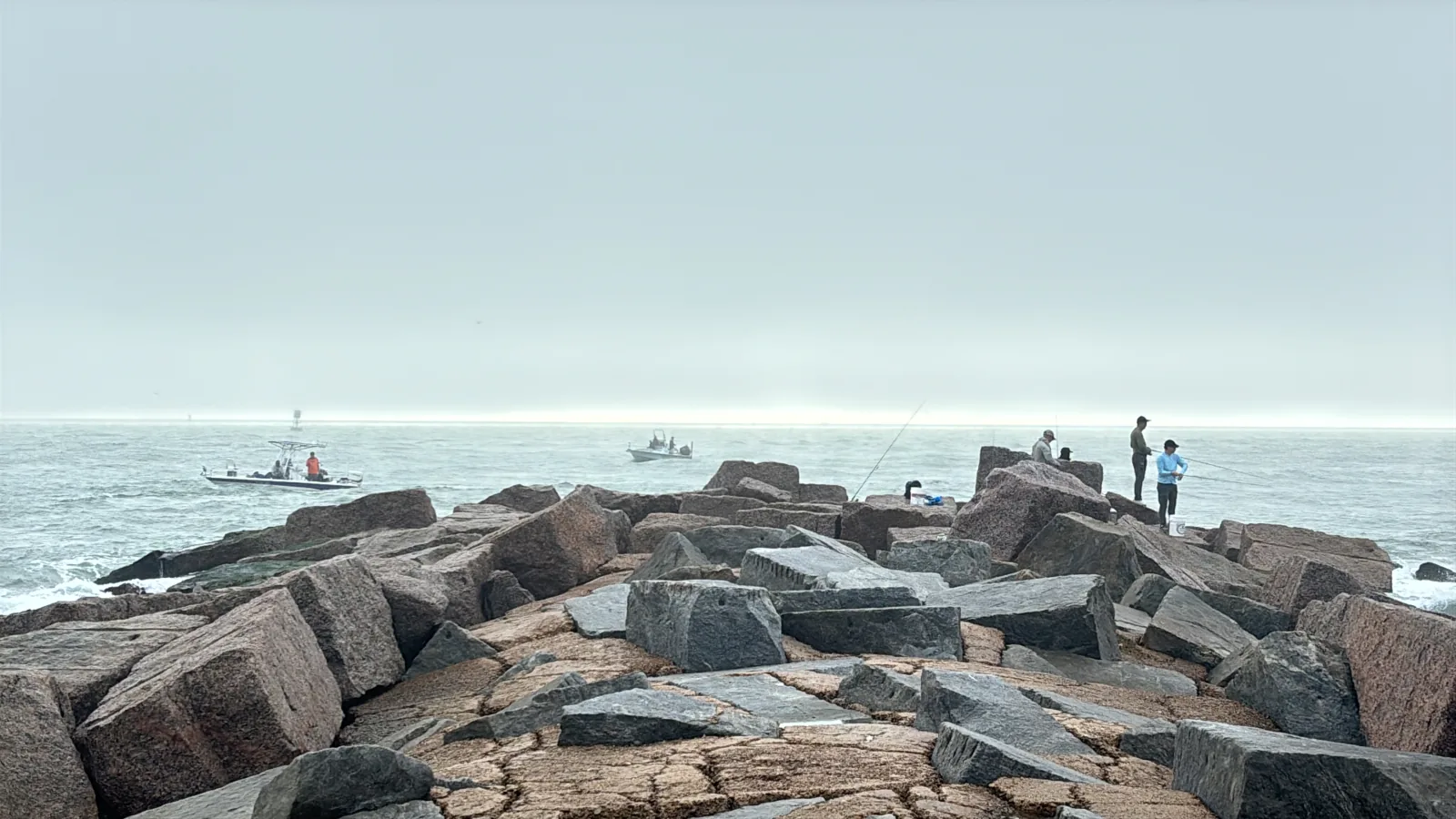
South Packery Channel Jetties – One of the Best Fishing Spots Near Corpus Christi
Just south of Port Aransas, the Packery Channel jetties are among the best-known shore fishing destinations on the Texas Gulf Coast. The channel separates Mustang Island from North Padre Island and connects the Laguna Madre area with the Gulf of Mexico.
We've spent quite a bit of time around this area, and it can be an absolute zoo when the fishing is good. Anglers line the rocks, especially during favorable weather and seasonal fish migrations. But there's a reason so many people show up: the fishing can be outstanding.
Unlike a traditional jetty that simply extends from the beach, Packery Channel has two substantial rock structures protecting a channel that carries tidal water between the Gulf and the inland bays. The moving water attracts baitfish, and the larger predators follow.
Speckled trout, redfish, sheepshead, and mangrove snapper are among the fish commonly targeted here. When conditions are right, anglers occasionally encounter larger game fish such as king mackerel and tarpon. There are even stories of unusually offshore species appearing around the jetties, although I wouldn't plan a trip around catching a mahi-mahi from the rocks.
Another attraction is the wade fishing on the Laguna Madre side of the channel. You'll often see anglers standing in the shallow water west of the bridge, working the flats and nearby drop-offs.
Be extremely careful if you decide to wade this area. Some sections transition from shallow flats into a much deeper, current-swept channel over a relatively short distance. What looks like easy knee-deep wading can quickly become dangerous if you step into deeper water.
For anglers who want to combine jetty fishing with surf fishing or kayaking, North Padre Island offers plenty of additional opportunities. We've also written about our experiences shark fishing from the beach on Padre Island, including some surprisingly productive mornings in the surf.
For more information about accessing the jetties, visit the Corpus Christi guide to South Packery Channel Beach.
South Padre Island – Some of the Best Jetty Fishing in South Texas
The final major jetty system on our trip south is located at South Padre Island, at the entrance to Brazos Santiago Pass. This is one of my favorite areas of the Texas coast, particularly during the fall when large bull redfish begin moving through the passes.
Most shore-based fishing takes place along the jetty accessible from Isla Blanca Park at the southern end of South Padre Island. The park provides convenient beach access, parking, restrooms, and other facilities. As of late 2026, the daily vehicle entrance fee is $15, although pedestrian access options and fees should always be checked before visiting.
You can park near the beach end of the jetty, which makes it much easier to reach than some other Texas fishing structures. It's also possible to walk in from outside the park, although you're looking at a fairly substantial walk depending on where you start.
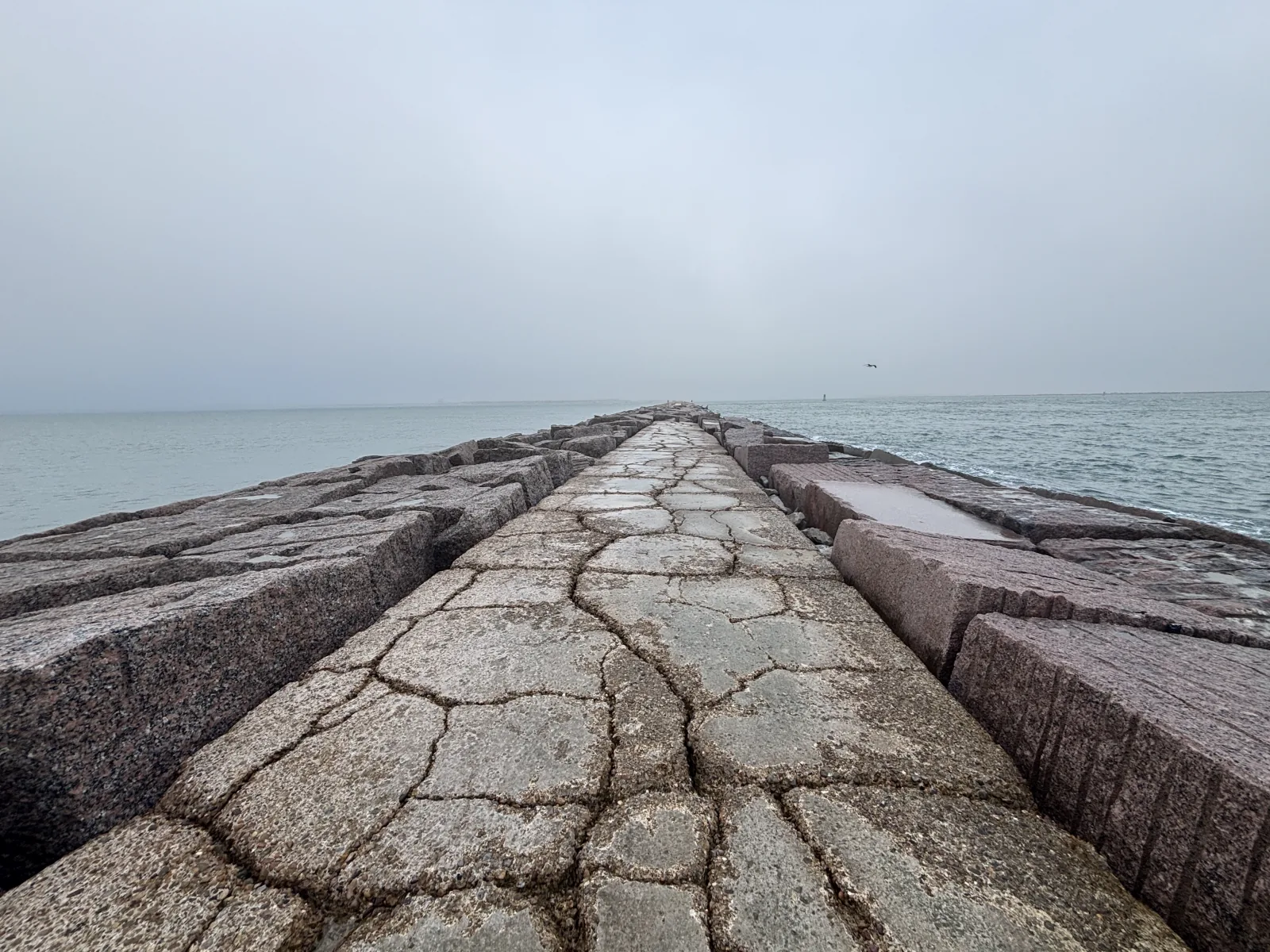
The jetty itself is not particularly friendly to people who have difficulty walking over large, uneven rocks. The surfaces can be slippery, waves occasionally crash over the structure, and carrying a heavy cooler and several fishing rods can become a workout.
But the fishing can make the effort worthwhile.
Redfish, sheepshead, speckled trout, stingrays, small blacktip sharks, and mangrove snapper are all possible catches. During mid-to-late fall, the area can be particularly good for targeting bull reds as they move along the Gulf Coast and through the passes.
For bait, there's a small convenience-store-style shop near the park that carries some basic tackle and frozen bait. However, I generally prefer stopping in Port Isabel before crossing the Queen Isabella Causeway onto South Padre Island.
The larger bait shops in Port Isabel usually offer a better selection of frozen bait, and live shrimp or croaker may be available depending on the season and supply. It's worth stocking up before crossing over to the island.
South Padre also has plenty of hotels, restaurants, and other activities, making it an excellent destination for a multi-day fishing trip.
Boca Chica Beach and the South Jetty – The Road Less Traveled
One of the more interesting fishing spots in the area is the jetty across Brazos Santiago Pass from South Padre Island, accessible from the Boca Chica side.
Although the two jetties are separated by only a relatively short stretch of water, getting from one to the other by car is an entirely different matter. You have to drive back across the causeway, head toward Brownsville, and then take State Highway 4 east toward Boca Chica Beach.
The route passes directly through the Starbase area, home to SpaceX's Starship development and launch facilities. Once you reach the beach, reaching the jetty may require additional travel along the sand, depending on conditions and available access.
Because of the long drive and relatively remote location, the Boca Chica side typically attracts fewer casual visitors than Isla Blanca Park.
In theory, that should make it an outstanding place to fish. You have the same general pass system, access to deep water, and potentially much less competition for fishing spots.
We haven't actually fished from this jetty yet, but it's definitely on our list.
One thing to keep in mind is that SpaceX testing and launches can result in closures of State Highway 4 and Boca Chica Beach. Before making the drive, check the City of Starbase's official beach and road access updates.
We've already spent some time fishing along the beach near the SpaceX facilities, which you can read about in our article on fishing at Starbase and Boca Chica Beach.
Tips for Fishing the Texas Gulf Coast Jetties
Before heading out to any of these locations, it's worth checking the surf forecast, tides, and wind conditions. Calm seas can make jetty fishing relatively comfortable, while large waves and strong currents can make the same location extremely dangerous.
A good pair of shoes or boots with excellent traction is essential. Wet jetty rocks can be surprisingly slippery, and I've seen plenty of anglers struggle while carrying too much equipment across uneven surfaces.
Live shrimp is a dependable bait for many smaller species, while live croaker, mullet, and cut bait can be productive when targeting larger fish. Artificial lures can also work extremely well, especially when trout or redfish are actively feeding around the rocks.
Fall is one of my favorite seasons for jetty fishing, particularly when the bull redfish are running. However, productive fishing is possible throughout much of the year if you're willing to adjust your tactics and target species.
Before keeping fish, check the current Texas saltwater fishing regulations for size limits, bag limits, and licensing requirements.
Which Texas Fishing Jetty Is the Best?
That depends on what you're looking for.
For easy access, it's hard to beat the Texas City Dike, where you can drive for miles along the structure and fish relatively close to your vehicle. If you're interested in excellent fishing with nearby restaurants, hotels, and beaches, Port Aransas and Packery Channel are both outstanding choices.
Personally, I really enjoy South Padre Island. The fishing opportunities, warm weather, and surrounding attractions make it a great place to spend several days. And during the fall bull redfish run, the jetties can offer some excellent action.
There are still several locations along this stretch of coastline that we haven't explored as thoroughly as I'd like. The Boca Chica jetty is near the top of that list, along with a return trip to Freeport.
One of the best things about fishing the Texas Gulf Coast is that you don't necessarily need an expensive boat or offshore charter to catch quality fish. With a couple of rods, a bucket of bait, and a little patience, you can find some excellent fishing from the rocks.
And if the fish aren't biting, you're still spending the day along one of the most interesting stretches of coastline in Texas.